





There is a particular kind of absence in modern city life that is easy to miss until you stumble into its opposite. Not a lack of things to do, or places to go, cities have plenty of both. What’s harder to find is a space with no agenda. Somewhere to show up as a neighbour rather than a consumer. Somewhere that asks nothing of you but your presence.
That is the gap that outdoor community sauna fills. And in Toronto, a growing number of people are beginning to feel it.
Why This Moment
Cities across the world are grappling with the slow erosion of genuine public gathering space. Parks exist, but they don’t hold you through a January evening. Community centres serve a function, but carry the weight of programming and purpose. What’s increasingly scarce is the kind of space that simply brings people together.
Sauna has always been that space. Not as a product or a treatment, but as a ritual. A weekly rhythm. A place where the usual hierarchies dissolve and strangers become, over time, neighbours. For cities searching for ways to make winter feel less isolating and public space feel more human, the outdoor community sauna is less a trend than a long-overdue arrival.
A Trailer, a Lake, and a Community That Grew
Kotisauna began without a business plan. A few winters ago, a small group of friends dragged a wood-fired sauna on a trailer down to a Toronto beach. The motivation was simple: curiosity about contrast therapy and a desire to do something outdoors and analog in the middle of January.
What happened next was less expected. Word spread, quietly, the way good things do — and a community started to form. Within two seasons, more than a thousand visitors had made their way to that lakeside setup. All ages, all backgrounds. Neighbours who had never crossed paths, sharing the same simple ritual.
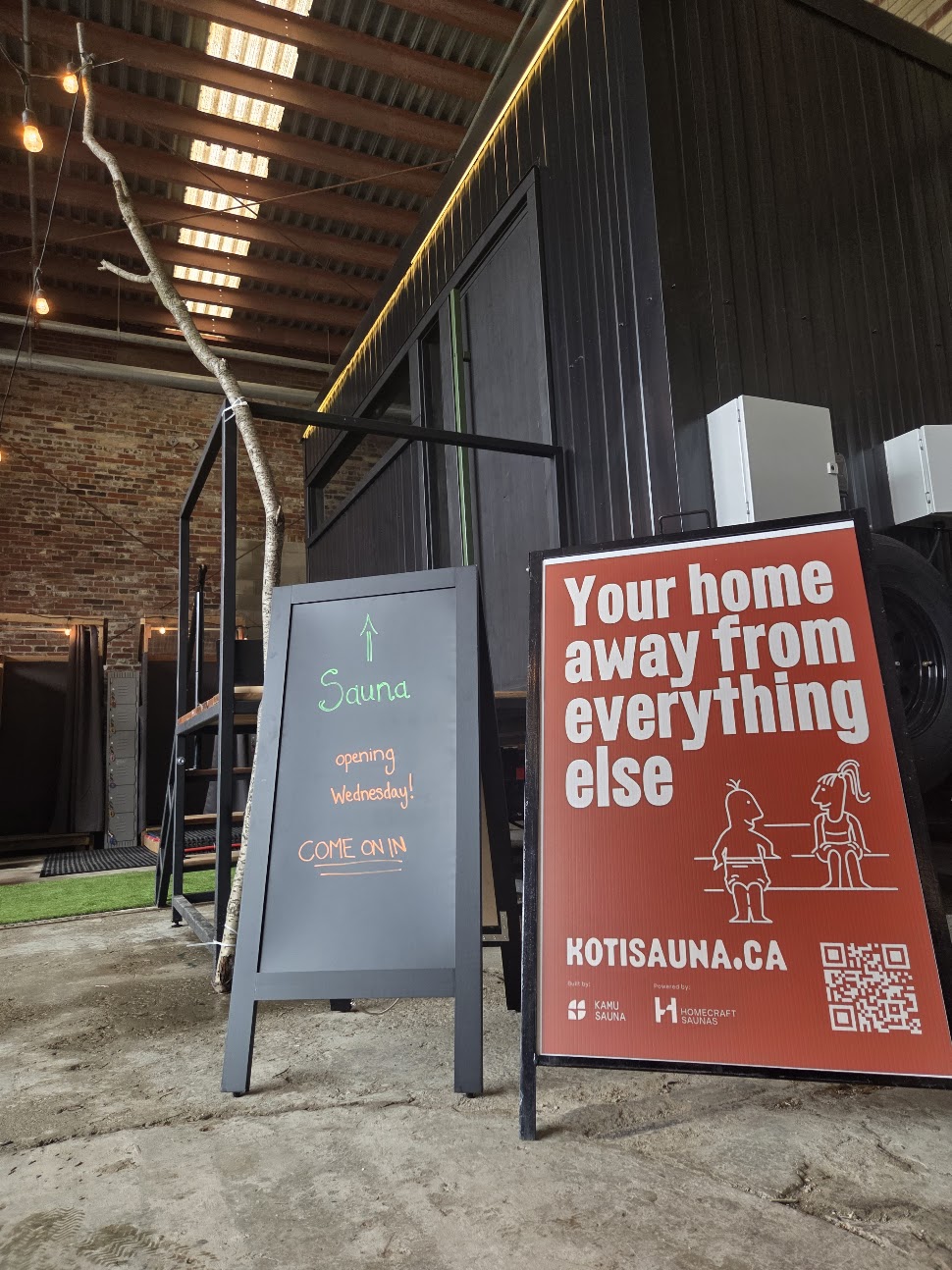
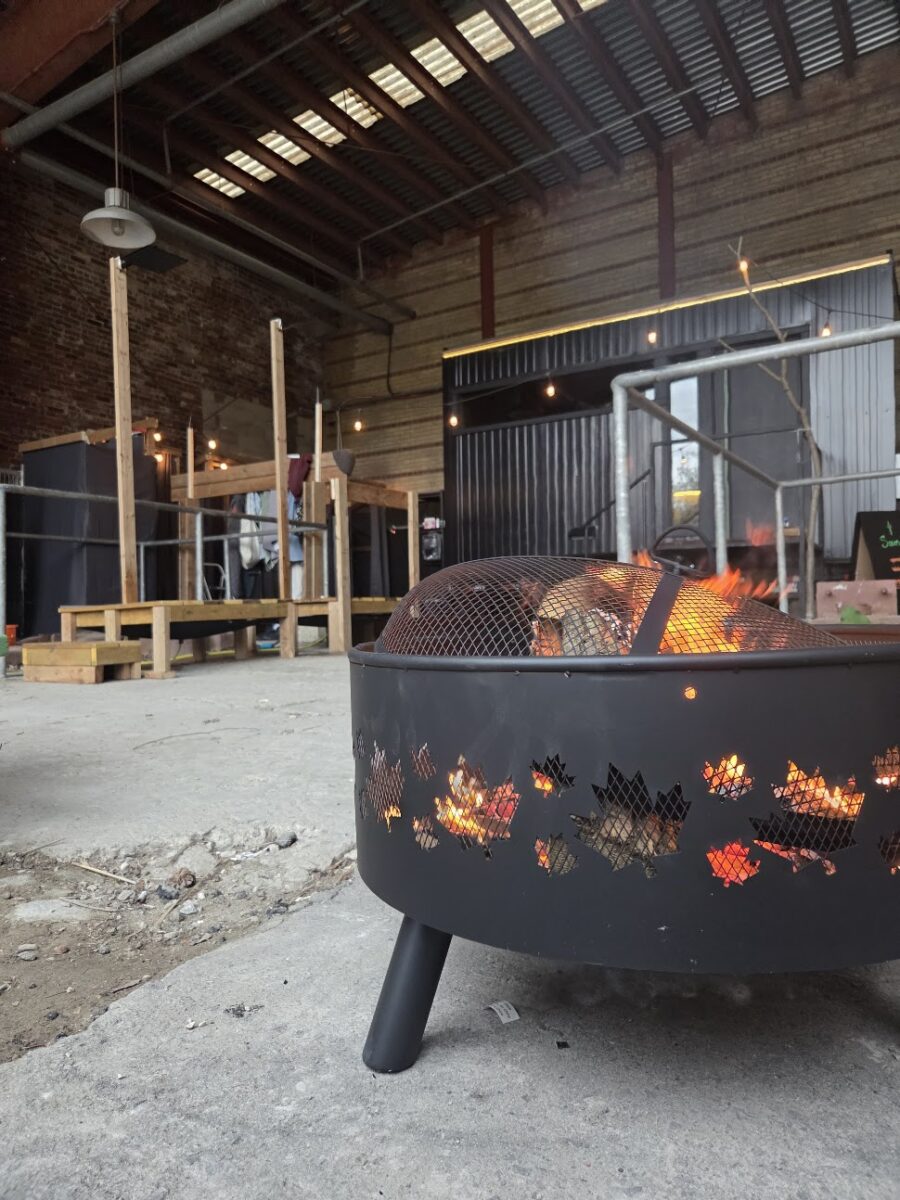
That experiment is now Kotisauna, newly opened and now operating at Evergreen Brick Works in Toronto’s Don Valley — a former industrial quarry turned environmental and community hub at the edge of the city’s ravine system. The move from the beach to the Brick Works wasn’t just a change of venue. It was a step toward something more permanent: a demonstration that outdoor community sauna can take root in a Canadian city, and that when it does, people come.
A Growing Movement, Globally
Toronto is not alone in rediscovering this. Around the world, a quiet but distinct movement has been taking shape — one that positions sauna not as a luxury retreat, but as a form of community infrastructure available to anyone.
In Helsinki, Sompasauna has operated as a fully volunteer-run, open-access sauna since 2011 — no staff, no booking system, no entry fee. Visitors chop their own firewood and share the heat with whoever shows up. It has become one of the city’s most beloved gathering places precisely because of its simplicity.
In the United Kingdom, Community Sauna Baths has been working to bring affordable, accessible sauna back into public life — drawing on the tradition of the Victorian bathhouse and reimagining it for contemporary neighbourhoods. In Oslo, the nonprofit Oslo Sauna Association has been expanding access to sauna culture through community-run facilities that prioritize belonging over profit.
What connects these initiatives is not a particular aesthetic or format, but a shared orientation: sauna as a gathering place, open to everyone, sustained by community rather than commerce. That model is finding resonance in cities that have never had a sauna culture to speak of — which suggests the hunger is not for sauna specifically, but for what sauna makes possible.
Why There Aren’t More
If the appetite is there, the question becomes: what’s in the way?
The honest answer is that bringing an outdoor community sauna to life in a city that has never had one requires building almost everything from scratch. Municipal permitting processes weren’t designed with this experience in mind. Insurance frameworks often have no existing category for it. And without an established culture of public sauna to point to, operators frequently find themselves in the position of educator first — making the case for what this is, why it matters, and why it belongs in a public space — before any of the practical work can begin.
This is a global pattern, not a local one. From Toronto to London to Oslo, the operators leading this movement have found that the bureaucratic and cultural groundwork is as demanding as the physical build. The sauna is the easy part. The harder work is creating the conditions for it to exist at all.
The Village Behind It
None of it happens alone. What has made Kotisauna possible is a community of partners, craftspeople, and believers who share a conviction that this kind of space is worth building.
Two of those partnerships formed through the connections made at the World Sauna Forum 2025 in Finland — a gathering of operators, builders, educators, and enthusiasts from across the globe who carry the tradition of authentic sauna forward in their respective corners of the world.
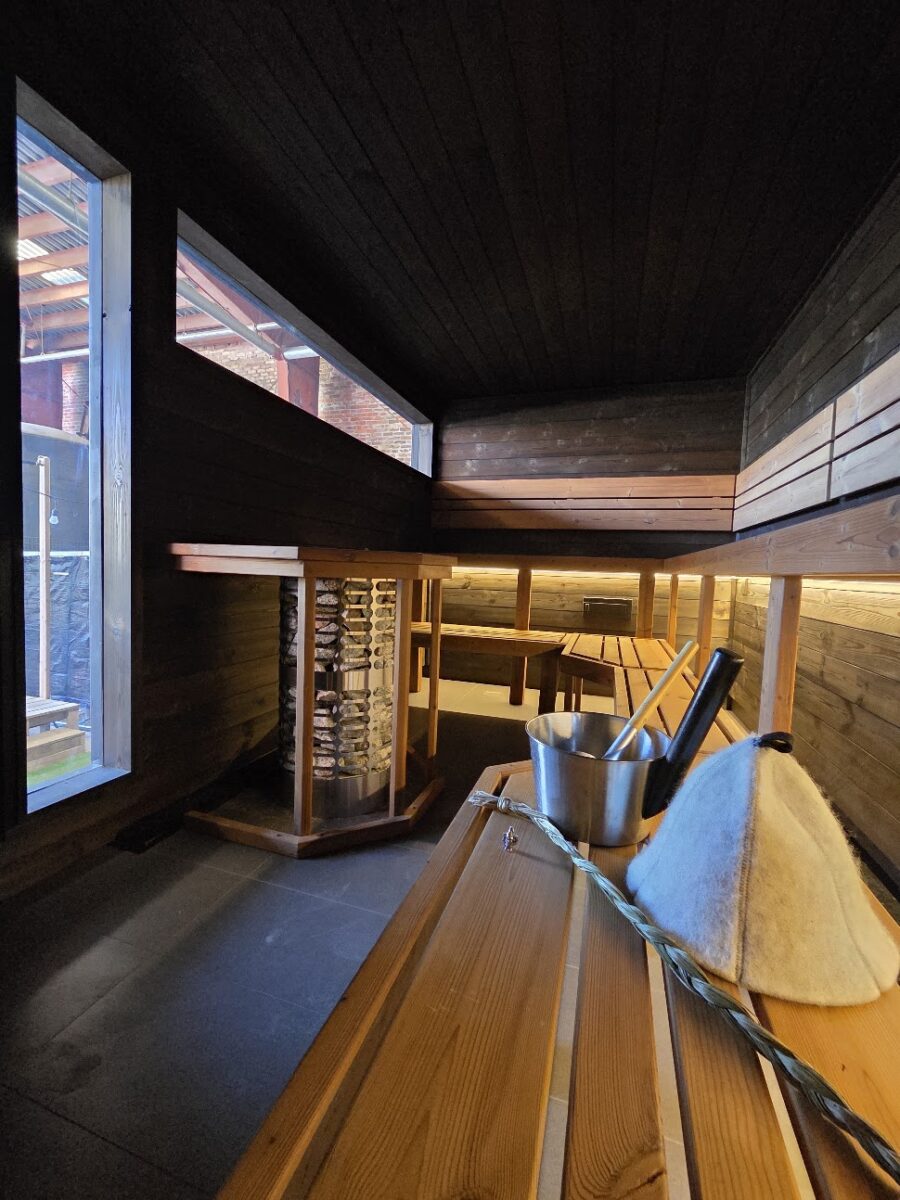
Kamu Sauna, a Canadian designer and builder of wood-fired saunas led by Becky and Juho Pelkonen, designed and built the structure at the heart of the Kotisauna experience. Their work is grounded in cultural integrity and a deep understanding of what makes a sauna feel right — not just how it looks, but what it does to the people inside it.
At the centre of that structure is a stove by HomeCraft, a Canadian company whose wood-burning units deliver the kind of steady, enveloping warmth that sauna bathers recognise immediately as the real thing. The genuine löyly.
That both partners are Canadian matters. It means the knowledge and craft being shared through networks like the World Sauna Forum is finding its way home — and that the foundation for a broader outdoor community sauna movement in this country is being laid, one partnership at a time.
A Ritual That Belongs to Everyone
Finnish sauna culture was inscribed on UNESCO’s list of Intangible Cultural Heritage in 2020 — recognition not of a building or a product, but of a practice. A way of being together that has endured for thousands of years across climates, cultures, and contexts.
What is taking shape in Toronto, and in cities around the world, is an adaptation of that practice — rooted in the same fundamentals, finding new forms. The regulatory path is being cleared. The partnerships are forming. The communities are gathering.
The ritual is ancient. The spaces it can inhabit are just beginning to open up.